
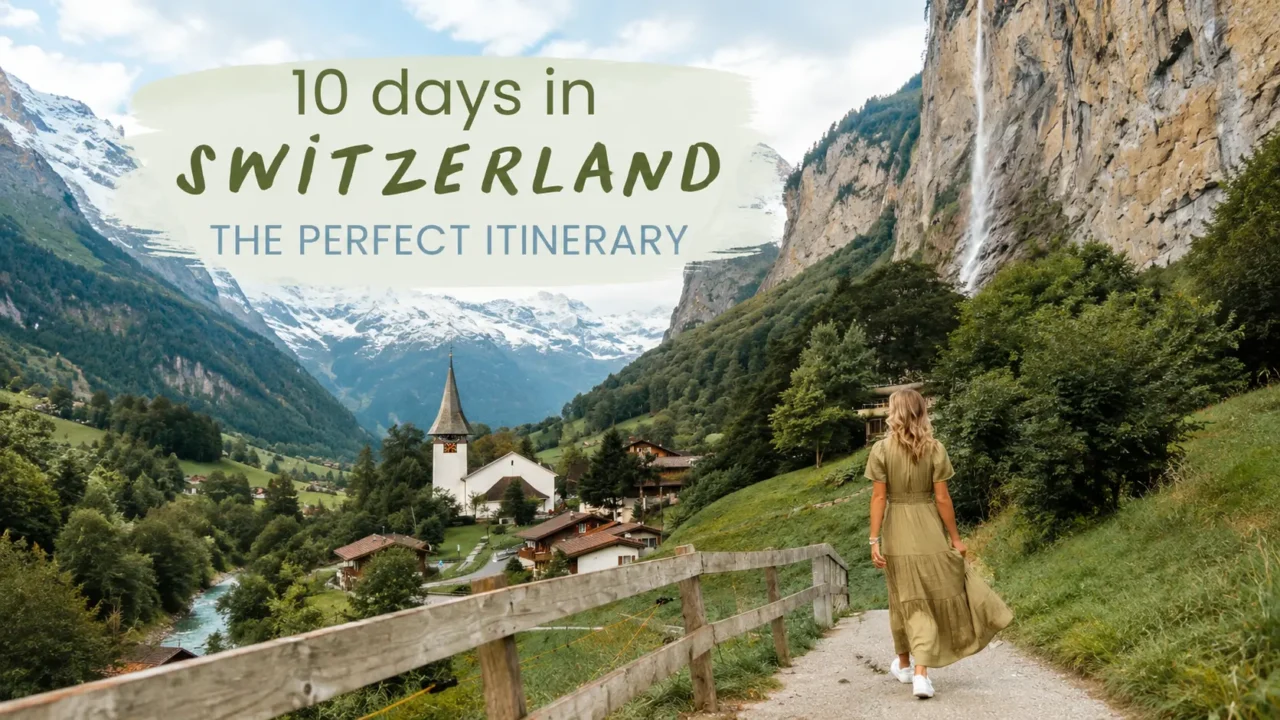
Planning a trip to Switzerland can feel difficult because there are so many beautiful places to choose from. Should you visit Zurich, Lucerne, Interlaken, Zermatt, Geneva, or the Swiss Alps? The good news is that Switzerland is well connected by train, making it possible to combine several destinations without spending your entire holiday on the road. The official Switzerland Tourism network also provides several suggested itineraries, including routes of five, six, seven, and eight or more days. If you are looking for practical itineraries Switzerland travellers can actually use, this guide covers several options for different trip lengths, travel styles, and seasons.
Quick Switzerland Itinerary Overview
| Trip length | Suggested route | Best for |
|---|---|---|
| 5 days | Zurich → Lucerne → Interlaken | First-time visitors |
| 7 days | Zurich → Lucerne → Interlaken → Zermatt | Mountains and classic Swiss scenery |
| 8 days | Zurich → Lucerne → Interlaken → Montreux → Zermatt | Scenic rail travel |
| 10 days | Zurich → Lucerne → Interlaken → Zermatt → St. Moritz | A more complete Alpine trip |
| 14 days | Zurich → Lucerne → Interlaken → Montreux → Zermatt → St. Moritz → Lugano | Slow-paced exploration |
These are flexible plans. You can remove a destination if you prefer a slower holiday or add extra nights to your favourite location.
5-Day Switzerland Itinerary
If you have only five days, avoid trying to see the whole country. A compact route through central Switzerland gives you a good combination of cities, lakes, and mountains.
Day 1: Arrive in Zurich
Start your trip in Zurich.
Depending on your arrival time, explore the Old Town, walk along the Limmat River, and spend some time around Lake Zurich.
If you arrive late, simply use Zurich as an overnight stop and begin sightseeing the following morning.
Overnight: Zurich
Day 2: Zurich to Lucerne
Travel to Lucerne in the morning.
Lucerne is known for its lake, historic centre, Chapel Bridge, and mountain surroundings.
Spend the afternoon exploring the old town and lakeside area.
Overnight: Lucerne
Day 3: Lucerne to Interlaken
Take the scenic Luzern–Interlaken Express toward Interlaken.
Switzerland Tourism describes this route as a panoramic journey between lakes, mountains, and waterfalls. The Zurich–Lucerne–Interlaken section takes about 2¾ hours in total.
After arriving in Interlaken, explore the town or take a short trip to nearby viewpoints.
Overnight: Interlaken
Day 4: Explore the Jungfrau Region
Use Interlaken as your base for a mountain day.
Possible choices include:
- Lauterbrunnen
- Grindelwald
- Wengen
- Mürren
- Jungfraujoch
- Harder Kulm
You do not need to visit everything. Pick one main excursion and leave enough time to enjoy the scenery.
Overnight: Interlaken
Day 5: Interlaken and Departure
Enjoy a relaxed morning before travelling back toward Zurich or continuing to your next destination.
This itinerary works particularly well if Switzerland is one part of a longer European trip.
7-Day Switzerland Itinerary
A week gives you more flexibility. You can combine central Switzerland with the Matterhorn region.
Days 1–2: Zurich and Lucerne
Spend your first day in Zurich.
On Day 2, travel to Lucerne and explore the city and Lake Lucerne.
If you enjoy mountain excursions, you could consider Mount Pilatus, Mount Rigi, or Titlis, depending on the season and operating conditions.
Days 3–4: Interlaken
Travel from Lucerne to Interlaken.
Spend one day exploring Interlaken and another visiting the Jungfrau Region.
Lauterbrunnen and Grindelwald are particularly useful options for travellers who want mountain scenery without changing hotels.
Days 5–6: Zermatt
Travel to Zermatt.
Zermatt is a mountain village associated with the Matterhorn and is a popular base for mountain excursions. Switzerland Tourism also highlights the Gornergrat Railway and hiking opportunities in the region.
Spend your second day exploring the surrounding mountains.
Day 7: Departure
Depending on your flight or onward journey, return toward Zurich or another Swiss city.
Suggested route:
Zurich → Lucerne → Interlaken → Zermatt → Zurich
This is one of the easiest itineraries Switzerland beginners can follow without trying to cover too much ground.
8-Day Scenic Switzerland Itinerary
If train travel is one of the main reasons you want to visit Switzerland, consider a longer scenic route.
Switzerland Tourism’s official Grand Train Tour “Original” itinerary takes at least eight days and includes Zurich, Lucerne, Interlaken, Montreux, Zermatt, St. Moritz, Lugano, St. Gallen, and other destinations.
A simplified version can look like this:
Day 1: Zurich → Lucerne → Interlaken
Start in Zurich and continue through Lucerne to Interlaken.
Overnight: Interlaken
Day 2: Interlaken → Montreux
Travel through the GoldenPass route toward Montreux.
Spend the evening beside Lake Geneva.
Overnight: Montreux
Day 3: Montreux → Zermatt
Travel toward Zermatt through the Swiss Alps.
Spend the evening exploring the village.
Overnight: Zermatt
Day 4: Zermatt → St. Moritz
This is a major scenic travel day.
The official Grand Train Tour itinerary uses the Glacier Express between Zermatt and St. Moritz. Switzerland Tourism lists the journey at about 7 hours and 46 minutes.
Overnight: St. Moritz
Day 5: St. Moritz → Tirano → Lugano
Continue south using the Bernina Express route.
This journey changes the scenery dramatically, moving from Alpine landscapes toward the warmer Ticino region.
Overnight: Lugano
Day 6: Explore Lugano
Take a slower day.
Walk along Lake Lugano, explore the city, and consider a mountain excursion if the weather and transport schedules allow.
Day 7: Lugano → Lucerne
The Grand Train Tour uses the Gotthard Panorama Express route between Lugano and Lucerne.
Day 8: Lucerne → Zurich
Finish your trip in Zurich or adjust the route according to your flight.
10-Day Switzerland Itinerary
With ten days, you can slow down and spend more time in the mountains.
Days 1–2: Zurich
Explore Zurich without rushing.
Visit the Old Town, lakefront, and major city attractions.
Days 3–4: Lucerne
Move to Lucerne and spend two nights.
Use one day for the city and another for a mountain or lake excursion.
Days 5–6: Interlaken
Travel to Interlaken.
Spend one day in the Jungfrau Region and another exploring nearby villages or lakes.
Days 7–8: Zermatt
Travel to Zermatt.
Plan a mountain-view day and keep some flexibility for changing weather.
Day 9: St. Moritz
Travel to St. Moritz if you want to include the Engadin region.
Day 10: Departure
Travel toward your departure airport or continue to another European destination.
Route:
Zurich → Lucerne → Interlaken → Zermatt → St. Moritz
This plan is better for travellers who want mountains and scenic trains rather than a city-heavy holiday.
Best Places to Include in a Switzerland Itinerary
You do not need to visit every famous destination. Choose locations that match your interests.
Zurich
Best for:
- International arrivals
- Shopping and city sightseeing
- Museums
- Restaurants
- A convenient starting point
Lucerne
Best for:
- Lake views
- Historic streets
- Mountain excursions
- A relaxed city break
Lucerne also works well as a base for day trips.
Interlaken
Best for:
- Jungfrau Region
- Hiking
- Adventure activities
- Mountain villages
- Lake Thun and Lake Brienz
Zermatt
Best for:
- Matterhorn views
- Mountain railways
- Hiking
- Alpine scenery
Montreux
Best for:
- Lake Geneva
- Vineyards
- Lakeside walks
- Chillon Castle
- A French-speaking Swiss atmosphere
St. Moritz
Best for:
- Engadin scenery
- Mountain experiences
- Scenic rail journeys
- A longer Alpine holiday
Lugano
Best for:
- Lake scenery
- Italian-speaking Switzerland
- Mild southern atmosphere
- Food and relaxed sightseeing
How to Choose the Right Switzerland Itinerary
Start with the amount of time you have.
For 3–4 days: Choose Zurich, Lucerne, or Interlaken rather than attempting a countrywide tour.
For 5 days: Combine Lucerne and Interlaken.
For 7 days: Add Zermatt.
For 8–10 days: Consider Montreux or St. Moritz.
For 10–14 days: You can create a more relaxed multi-region journey.
A useful rule is to spend at least two nights in your most important destinations. Constantly changing hotels can make a beautiful trip feel like a transportation schedule.
Train Travel in Switzerland
For many visitors, trains are one of the easiest ways to move between destinations.
The official SBB timetable lets travellers check connections, current service information, and ticket options. SBB says its timetable integrates information from Swiss public transport companies and is updated as changes occur.
Switzerland Tourism’s Grand Train Tour is also designed around rail, bus, and boat connections.
The full Grand Train Tour covers about 1,280 kilometres and includes eight sections, 11 large lakes, and five UNESCO World Heritage Sites.
Do You Need a Swiss Travel Pass?
It depends on your route and how much public transport you plan to use. The Swiss Travel Pass is one option for international visitors, while point-to-point tickets, Saver Day Passes, and other fares can also be used. For example, Switzerland Tourism states that the Swiss Travel Pass covers the sections of the Grand Train Tour, although certain panoramic trains require additional seat reservations.
Before buying a pass, compare:
- Your planned train journeys
- Number of travel days
- Mountain excursions
- Boat trips
- Any required reservations
- Individual ticket prices
Don’t automatically assume a pass is cheaper.
Important Scenic Train Reservations
If your itinerary includes famous panoramic trains, check reservation requirements before travelling.
Switzerland Tourism currently states that seat reservations are mandatory for:
- Glacier Express
- Bernina Express
- Gotthard Panorama Express
Reservations are recommended but not mandatory for some other scenic services, including the GoldenPass Line.
This is especially important during busy travel periods.
Best Time for a Switzerland Trip
Switzerland can be visited throughout the year, but your ideal itinerary depends heavily on the season.
Summer
June through August is useful for hiking, lakes, outdoor activities, and mountain trips. Switzerland Tourism describes summer as the warmest period, with many activities available in both lowland and mountain areas.
Autumn
September and October can be attractive for changing foliage, cooler temperatures, and mountain scenery.
Winter
December through March is suited to travellers interested in snow and winter activities. Conditions vary significantly by altitude and location.
Spring
Spring brings greener landscapes and blooming vegetation, but mountain conditions can still vary.
The weather can change quickly in mountain regions, so check local conditions before planning high-altitude activities.
Practical Tips for Planning Itineraries Switzerland
1. Don’t change hotels every night
Two or three nights in one location usually gives you more time to enjoy the destination.
2. Keep mountain days flexible
Cloud, rain, wind, or snow can affect mountain views and transport.
If seeing a particular mountain is important to you, avoid scheduling it on the last day.
3. Check train times before travelling
Use the official SBB timetable shortly before each journey because schedules and service conditions can change.
4. Book popular panoramic trains early
If your itinerary includes the Glacier Express, Bernina Express, or Gotthard Panorama Express, check reservation requirements when planning your tickets.
5. Pack for different temperatures
Altitude can make mountain areas considerably cooler than cities.
Switzerland Tourism recommends items such as a sweater, comfortable walking shoes, sunglasses, sunscreen, and rain protection.
6. Don’t overload your itinerary
Switzerland rewards slow travel.
It is often better to enjoy three destinations properly than to collect ten hotel check-ins.
A Simple 7-Day Plan at a Glance
For travellers who want a straightforward plan, use this:
| Day | Destination | Main idea |
|---|---|---|
| 1 | Zurich | City sightseeing |
| 2 | Lucerne | Old town and lake |
| 3 | Lucerne → Interlaken | Scenic train journey |
| 4 | Interlaken | Jungfrau Region |
| 5 | Interlaken → Zermatt | Alpine journey |
| 6 | Zermatt | Matterhorn region |
| 7 | Zermatt → Zurich | Return/departure |
You can easily modify this by replacing Zermatt with Montreux if you prefer lakes, vineyards, and western Switzerland.
Frequently Asked Questions
What is the best Switzerland itinerary for first-time visitors?
For a first visit, a route such as Zurich → Lucerne → Interlaken → Zermatt works well for a week because it combines cities, lakes, villages, and Alpine scenery without covering the entire country.
How many days are enough for Switzerland?
Five days can provide a useful introduction, while seven to ten days allow a more comfortable trip. If you want to experience several panoramic train routes and different regions, consider eight days or more.
Is Switzerland easy to travel by train?
Yes. Switzerland has an extensive public transport network, and SBB provides a nationwide timetable for planning journeys.
Should I visit Interlaken or Zermatt?
They offer different experiences. Interlaken is a convenient base for exploring the Jungfrau Region, while Zermatt is particularly associated with the Matterhorn and high-Alpine scenery. Your choice should depend on which type of mountain experience you want.
Is a Swiss Travel Pass worth it?
It can be useful for travellers making several public transport journeys, but it is not automatically the cheapest option. Compare the pass with individual tickets and your planned excursions before buying.
Can I visit Switzerland in winter?
Yes. Winter can be excellent for snow-based activities and Alpine scenery, but conditions vary by altitude. Check weather and transport information before travelling.
Conclusion
The best itineraries Switzerland travellers can follow are not necessarily the ones that cover the most places. A good itinerary balances travel time with sightseeing. For a short first trip, focus on Lucerne and Interlaken. With a week, add Zermatt. With eight to ten days, consider Montreux, St. Moritz, or Lugano and include one or more scenic train journeys. Most importantly, leave some flexibility for mountain weather and use the official SBB timetable to check your connections before each journey.