
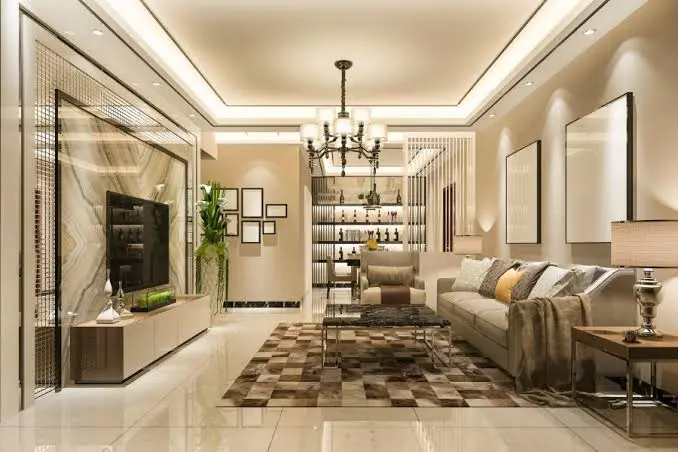
A luxury villa interior is defined by substance over decoration: natural stone and hardwoods, bespoke furniture, layered lighting and hotel-level detailing in every room — not by racking up branded sofas. The luxury is felt in the finish, the light and the service that surrounds the design, and it should photograph honestly. Luxury” is one of the most overused words in villa marketing, which is exactly why it pays to be precise. A luxury interior is not a checklist of expensive objects. It is a set of design and service commitments: exceptional materials used properly, a coherent scheme where nothing fights, light controlled the way a director controls a film set, and working details (silent doors, generous storage, functional lighting) that most people never notice but everyone feels. This guide explains what genuine luxury villa interiors share, why some impressive-looking villas miss the mark, and how to judge one before you book — or commission one for your own home. Start with our guide to the best luxury villas for the operational side, then come back here for the design layer.
Key takeaways
- Luxury is materials and light used properly, not expensive furniture piled on.
- Bespoke and tailored elements (joinery, lighting, art) read as luxury; identical catalogue pieces read as furniture.
- Layered lighting, calibrated dimming and quiet detailing beat statement pieces every time.
- The guest experience — bed, shower, climate control, service — is the real verdict on a luxury interior.
- A scheme that “says” luxury without substance photographs well and disappoints in person.
Materials: natural and used honestly
Walk through a genuinely luxury villa and the difference from a well-furnished one is almost always material. The premium interior relies on the same palette as good modern design, but specified at a higher level:
- Natural stone and marble — book-matched slabs, honed rather than over-polished, in large formats. Marble in kitchens needs care; quartz composite is used where practicality wins.
- Real hardwoods — European, oak, walnut and occasionally tropical hardwoods, in floors, ceilings and joinery. The grain, the width of the plank, the reveals around doors all carry the quality.
- Wool, silk and natural fabrics — bespoke curtains, wool carpet, linen upholstery. Luxury does not mean impractical; it means correctly specified for the climate and the use.
- Brass, bronze and stone details — door furniture, light switches, sanitaryware and hardware in solid metals rather than sprayed plastic finishes.
The key line: luxury materials are used architecturally. A slab of marble used as one accent wall in a room of painted plaster is cost without effect. In a luxury interior the material is part of the structure of the space — floors, built-in joinery, thresholds, fireplace — which is why it never reads as decoration.
Light as the primary material
The most persuasive luxury has relatively little to do with objects and everything to do with light. Compare a villa that “somehow” feels calm at dusk with one that feels flat: the difference is nearly always a proper lighting design.
- Layered, zoned, dimmed. Ambient wash, task light where people actually read, and accent light on art, plants and architectural features. Each zone separately dimmable.
- Colour temperature control. Warm (about 2700K) for living and bedrooms; the ability to shift scenes from bright daytime entertaining to intimate evening.
- Architectural integration. Light built into joinery, cove lighting, grazing washes across stone walls — fittings you can’t see doing the work, rather than lamps lined up on a shelf.
- Daylight choreographed. Full-height glazing framed to a single view, sheer layers that soften the morning, and orientation studies that keep the afternoon sun off the living area.
A pragmatic test when you view a “luxury” villa: switch the lights on at full, then start taking out individual source groups the way you would in practice. If you cannot have bright, dim and movie-like states from the same room, the lighting is not actually designed.
Bespoke and tailored versus catalogue
Custom and bespoke joinery is the fastest way to tell a genuine luxury interior apart from a furnished one, because tailoring cannot be faked cheaply.
- Built-in everything that can be built in — joinery is flush to walls, doors operate silently on soft-close hardware, wardrobes are fully fitted with leather or cloth linings, and basins, vanities and shelving are made to measure.
- Art and objects chosen, not matched. One strong contemporary painting or a considered sculpture grouping beats six generic prints from the same set.
- Quiet rolling stock — the audio-visual install, the home-automation panel, the climate control and the charging points are integrated and invisible, not a nest of wires on the sideboard.
- The kitchen as built furniture — an island with a single book-matched stone top, handleless cabinetry, and a proper appliance strategy (plate-warming drawer, wine storage, filtered taps) rather than a wall of branded white goods.
The rooms where luxury is judged
Guests judge a luxury villa by three rooms first: the main bedroom, the master bathroom and the living space where they actually spend evenings. Each has a non-negotiable baseline.
- The main bedroom — true blackout (lining matters more than the curtain design), a bed that is genuinely comfortable rather than merely huge, generous bedside surfaces for the “everything is a landing zone” reality of holidays, and a dressing area with real storage.
- The master bathroom — a generous rainfall shower and separate bath where space allows, heated towel rail (also dries swimwear overnight), double basins with room for two wash bags, and mirrors with proper light. Quality fittings over quantity of features.
- The living room — seating grouped for conversation rather than facing a screen, one genuinely comfortable sofa layout for a full group, and a drinks or pantry point close at hand so evenings don’t become gates to the kitchen.
For bedroom specifics, our guide to villa bedroom ideas covers the design decisions in depth.
Service as part of the interior
An important truth about luxury villas: the interior is experienced together with the service, and the two are inseparable in guest perception. The same house with a careful villa manager, a pre-arrival concierge and a welcome provision feels categorically more “luxury” than with nobody home.
- Pre-arrival planning — temperature set, lights welcoming, a stocked fridge and a clear arrival protocol. This costs almost nothing and sets the tone for the entire stay (see our guide to the villa guest experience for the full toolkit).
- The little repeating standards — daily servicing, chocolates on the pillow costs nothing, quality bath linen, and housekeeping that actually understands how to make a bed “hotel-style”.
- Done quietly. Luxury service in a villa is invisible until it is noticed accidentally — towels replaced while you are at the pool, thermostat already adjusted for evening, the same hint of citrus in the welcome.
A quick judgment checklist
| Criterion | What luxury looks like | What to look out for |
|---|---|---|
| Materials | Honed stone, hardwood, solid metals | “Stone-look” porcelain sold as stone |
| Lighting | Layered, dimmed, integrated | One ceiling light per room |
| Joinery | Built-in, flush, silent | Freestanding budget units |
| Bedroom | True blackout, real comfort | Huge bed, thin blinds |
| Bathroom | Rainfall shower, quality fittings | Statement tub, no shower pressure |
| Service | Pre-arrival prep, quiet housekeeping | Nobody on site, key in a box |
| Honesty | Scheme coherent in person | Styled for photos only |
Common mistakes in luxury villa interiors
- The catalogue stack. Expensive items assembled without an overall scheme read as a showroom; luxury is coherence.
- Fear of colour and texture. Luxury is not beige; deep greens, terracotta and warm woods inside raw stone give the depth that “expensive” actually means.
- Lighting as an afterthought. The most common gap on otherwise excellent villas — engage a lighting designer, not a sparky.
- Impractical hero pieces. A white boucle sofa on a rented coastal villa is a luxury for the photographer and a stress for the guest.
- Judging by the hallway. Marketing photos lead with the showiest room; always ask to see the bathrooms, the bedrooms at night and the service arrangement.
FAQ
How much does a luxury villa interior cost?
There is no universal figure — costs scale with size, region, material specification and whether you are renovating or furnishing. Get itemised quotations from local designers and treat every figure, including ours, as “typical” pending confirmation. The rule of thumb that holds in most markets: spend on architecture and joinery first, furniture second, and “finishing touches” last.
What makes a villa feel expensive without spending a fortune?
Lighting, scale and order. Calibrated dimming, correct colour temperatures, a well-proportioned sofa grouping, generous window dressing, flushes and reveals done carefully, and genuine stackable storage. These outperform era-specific furniture and are available at almost any budget.
Is smart home automation essential for a luxury villa?
No. Useful automation is; branded automation is not. Silent post-hoc systems for climate, exterior lighting, security and media add more genuine luxury than a control panel of rarely used scenes. Judge by whether the automation serves the stay, not by the number of touchscreens.
Luxury as a whole-property idea
The interior is one layer of a luxury villa — the site, the view, the landscape and the service complete the picture. The very best properties are designed as one composition: the material of the exterior entering the interior, the pool positioned as a mirror for the horizon, and the lighting plan running from the driveway to the last bedside lamp. That is why judging the interior alone is never enough. Browse our collection of the best luxury villas, and when you find a property that impresses, ask to see the quieter rooms before you commit — that is where the real standard shows.